



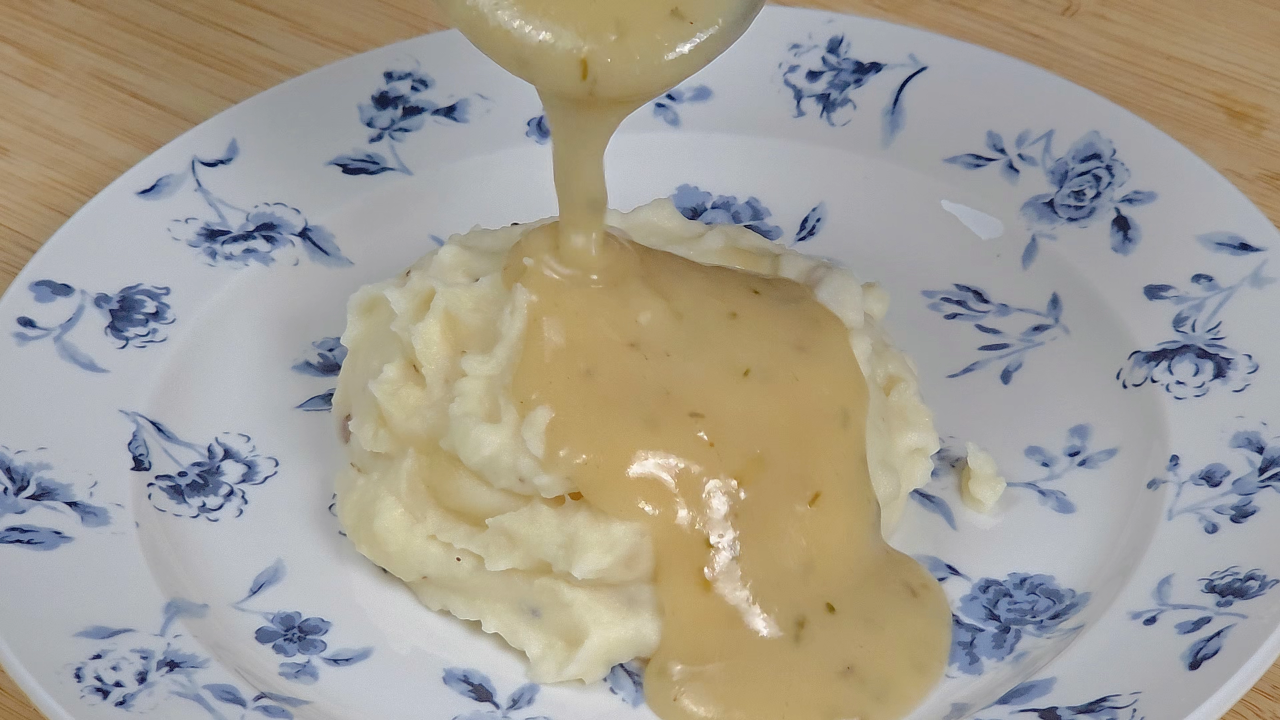
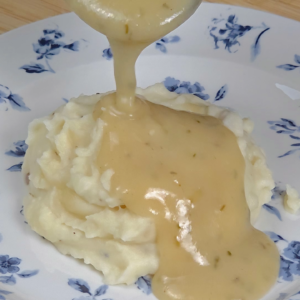
There’s just something special about Sunday meals. That’s the one day of the week where many of us tend to rest, so we have plenty of time to yourself to play around in the kitchen. Everyone has their favorite dishes that they enjoy eating for Sunday dinner. For some, it is Pork Chops. For others, it mighe be Catfish. For me, one of my favorite Sunday dinner meal is easily Fried Chicken with Mashed Potatoes and Corn. And while Mashed Potatoes can be perfectly good by themselves, drizzling them with some chicken gravy really takes them to a whole ‘nother level. In this post, I’m going to share my recipe for making old-fashioned chicken gravy at home entirely from scratch.
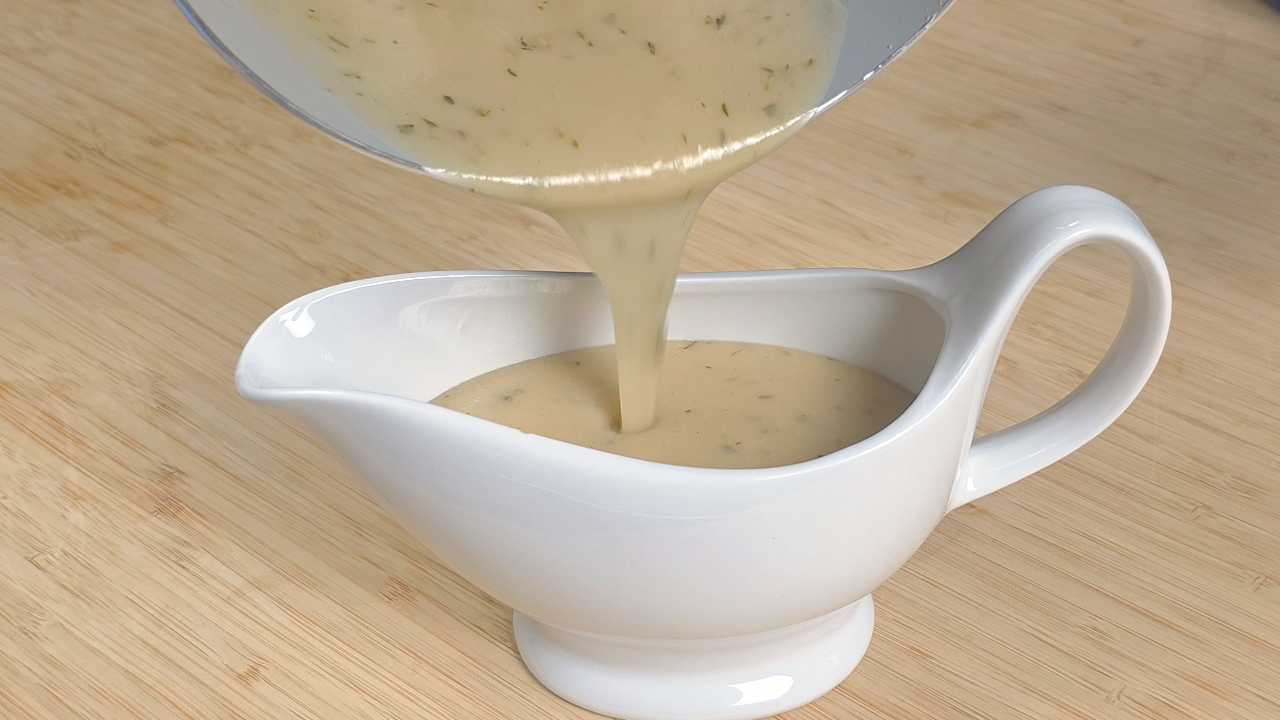
Key Ingredients for Chicken Gravy
This particular recipe for Chicken Gravy is made with a roux, thus it includes some of your standard ingredients: Flour, Butter and Chicken Broth. That said, what makes this recipe stand out from the rest is the use of Iodized Salt, Marjoram and White Pepper.
- Iodized Salt: If you’ve seen and tried enough of my recipes, you’ll notice that they all specifically call for the use of Iodized Salt. Iodized salt is what we also know best as table salt, thus it is easily accessible & available compared to Kosher or Sea Salt (which is what most other recipes will call for). Iodized salt also contains Iodine, and scientific studies have shown that a lot of us are deficient of this mineral (despite it being critical for our bodies to grow/develop/function normally). But that’s enough with the science lesson! The salt really helps to balance out the richness of the gravy, and it also helps to really draw out the complex flavor profile.
- White Pepper vs. Black Pepper: Often, you’ll find that most Chicken Gravy recipes call for the use of black pepper as seasoning. There’s nothing inherently wrong with using black pepper in gravy, but for this recipe, I prefer instead to use White Pepper for a couple of different reasons. For one, white pepper tends to have a milder flavor profile than its black pepper counterpart, which helps to ensure it doesn’t overpower all of the other flavors in the gravy. But another reason I find white pepper to be superior for this recipe (and really, all sorts of sauces & gravy) is because it is more visually appealing than black pepper, as it blends in seamlessly and gives it a smooth texture.
- Marjoram: A lot of folks would be surprised to know that both Marjoram and Oregano are herbs that share a number of smiliarities with each other. They both belong to the Origanum family and originate from the Mediterranean region of Northern Africa, Southern Europe and Western Asia. In fact, they’re often used interchangeably for dish or Greek / Italian / Mediterranean origin as well as in different types of gravy. What they both ultimately do is give dishes a woodsy, citrusy undertone. The main difference between the two for this Chicken Gravy recipe is while Oregano would give it a pungent note, Marjoram conversely tends to be much more delicate & mild, thus not overpowering the overall flavor profile in the chicken gravy.
And that’s all there is to it! Chicken Gravy pares well with all sorts of food. It is commonly enjoyed with side dishes such as mashed potatoes, stuffing and rice. However, it can also be drizzled on top of food such as fried chicken, baked chicken, grilled chicken, stuffed chicken and roast chicken. By the time you finish reading this post, you will also be a pro at making this gravy yourself and you’ll have your family & friends begging to make it all the time!
Tips for Making this Recipe
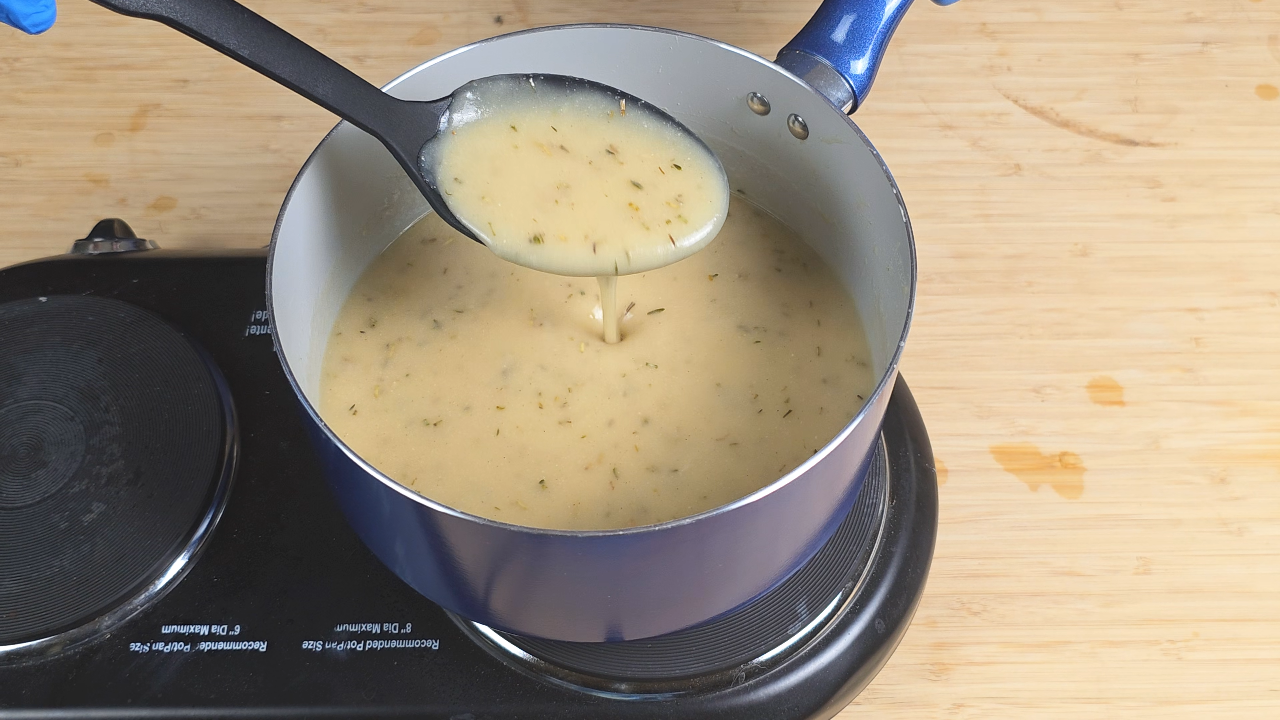
Gravy will continue to thicken as it cools. There are varying schools of thought when it comes to the right consistency for gravy. Famously, Chef Gordon Ramsay insists that gravy should be thin. However, there are other professionals who disagree with him. In my humble opinon, I think there’s a middle ground when it comes to gravy. It shouldn’t be as thick as paste, but it shouldn’t be thin to the point that it’s runny either. At the very least, the gravy should stick somewhat to the back of a spoon for optimal thickness. All of that being said, just be mindful that you’re not cooking the Chicken Gravy for too long, as it will continue to thicken while cooling.
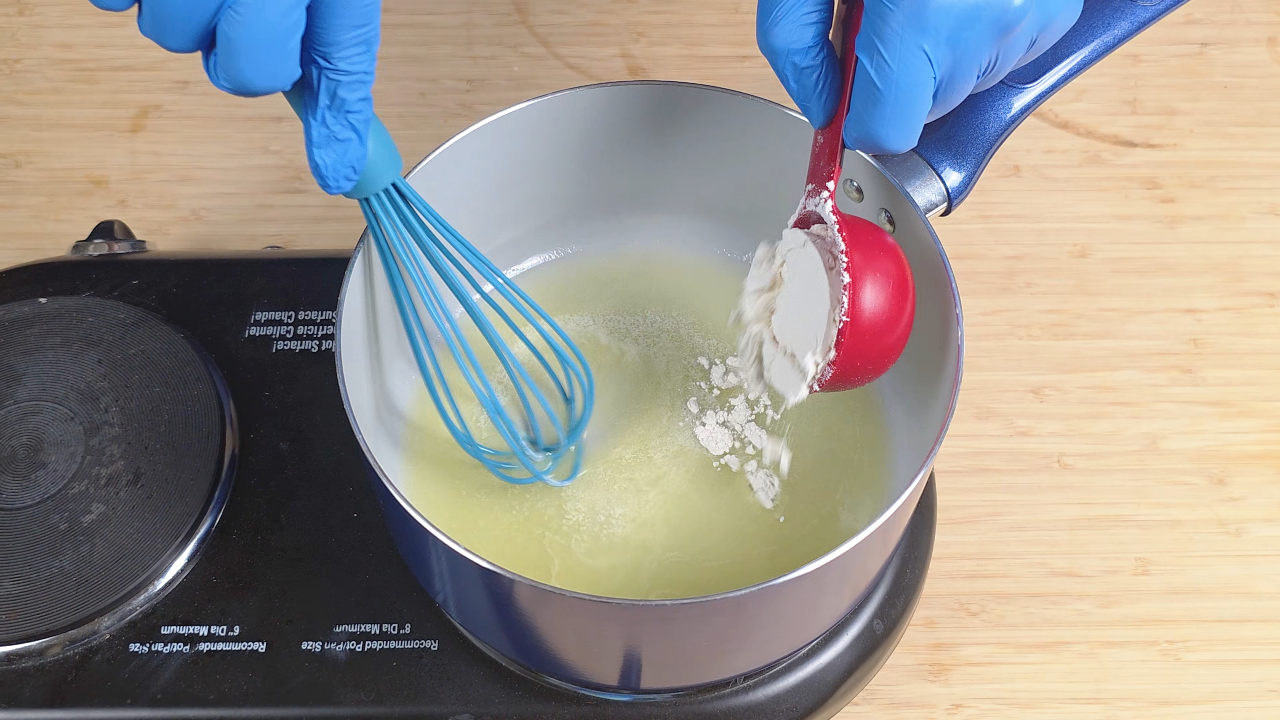
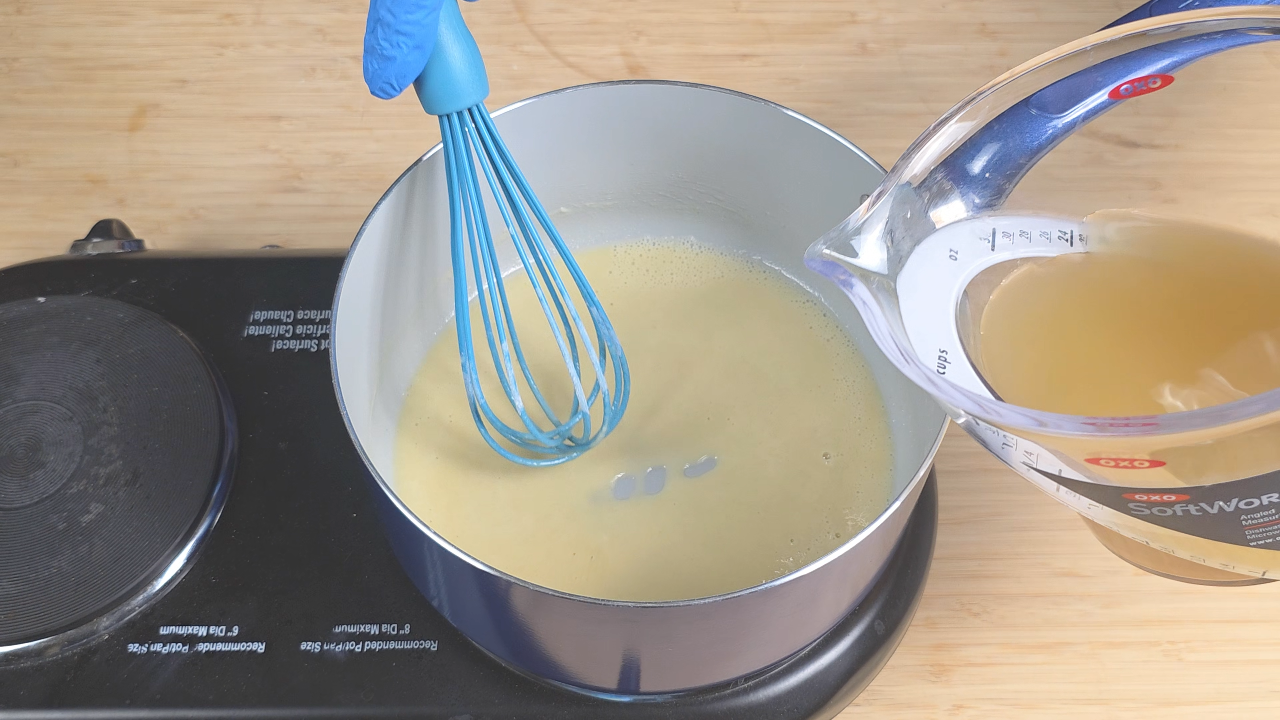
Don’t undercook the roux. You have to be really careful with timing when it comes to making a roux. I would say the #1 mistake a lot of cooks make when attempting to prepare homemade Chicken Gravy is that they don’t allow their roux to heat up long enough. It’s important that you don’t try mixing the broth with your roux too soon for a couple reasons. For one, you must allow sufficient time for heating up the raw flour, which at minimum must be cooked to a temp of 165*F in order to be safe for consumption. But in addition, your gravy will end up with a pale color if you tried mixing in your broth too soon.
Use a sieve to strain the gravy. While this is very much an optional step, and it’s one that I often skip, I strongly recommend (especially if you’re a beginner and have never made Chicken Gravy from scratch before) straining your gravy through a sieve into a bowl or pot before chilling and serving it. This will be an additional safeguard to ensure you don’t have any lumps in your final product. Personally, I do find this step to be a bit frustrating. The reason why is not because it’s hard or takes up too much additional time. Rather, it means that I’ll have another dish to wash, and clean up is the least fun part of cooking (*sigh*).
Monter Au Beurre. As you probably guessed, “Monter Au Berre” is a french term. When literally translated into English, it means “Mount With Butter.” This is a technique that is taught in culinary school and used by french chefs to elevate their sauces and gravy. With this, all you’re doing is adding a bit of cold butter (say, about a tablespoon or so) to the hot gravy or sauce once it is done. This does a couple things. Not only does it enhance the richness of the Chicken Gravy, but it also gives the gravy a velvety, shiny finish (which is nice for folks who are big on aesthethics). That being said, this is a optional technique and not required.
Frequently Asked Questions
Can I substitute the Chicken Broth with Chicken Drippings?
Absolutely! You would just use about 4 tablespoons of chicken fat along with 2 cups of water in place of the broth in order to make the Chicken Gravy. Alternatively, you can also still use butter as your fat then add 2 cups of chicken drippings in place of the broth.
Can I substitue the Chicken Broth for Chicken Stock?
While you certainly can use chicken stock in place of chicken broth, you should be mindful of a couple things. One, chicken stock tends to be less flavorful than chicken broth (at least the stuff sold commercially at stores), so you may have to adjust the spices/herbs in your Chicken Gravy accordingly to account for this. Also, chicken stock tends to have a thicker consistency than chicken broth, this you may have to adjust the cooking time accordingly as well to account for this.
Can I substitute the Butter for Margarine for the Chicken Gravy?
I do understand that not everyone is able to eat dairy products and that butter is simply not an option for such individuals. In such cases, you *COULD* replace the butter with margarine, but with a couple of important caveats. For starters, while margarine and butter are both different type of fats that can be used in gravy, their fat composition is not entirely equal. Margarine tend to have virtually no water in it (thus it’s 100% fat), whereas Butter typically has a water content of 20-25% (depending on the brand).
The other caveat is that the use of cooking oils will change the flavor profile of the gravy. Seed oils (I.E. Vegetable Oil, Canola Oil, etc.), are known to be neutral-tasting, meaning they have no flavor. So you will be losing the subtle nuttiness / sweetness in your Chicken Gravy that Butter offers.
All of that said, the short and sweet answer I can give you is I *DON’T* recommend it. For a more detailed answer, see above.
Can you freeze this Chicken Gravy? And if so, for how long?
You certainly can! Just be aware, there is the possibility that the ingredients could separate somewhat. To fix this, you should just stir them together (as well as add splashes of broth if too thick) until they’re well-combined again. This Chicken Gravy should maintain its freshness in the freezer for up to 6 months. Then once you’re ready to eat it, slowly thaw it out in the refrigerator overnight before attempting to heat it. Just be sure to place it in an airtight container and leave a bit of space to account for expansion as the liquid freezes.
Can I make this Chicken Gravy in advance?
Absolutely! You would just chill it in the refrigerator inside an airtight container, and it should be good for up to 3 days. Once ready to consume, you can reheat it in a saucepan or warm it up in the microwave for 30-second intervals. After 3 days, I would advise that you dispose of it as the Chicken Gravy may no longer be safe to consume.
Try These Other Recipes
-
Best Crispy Fried Chicken Recipe
-
Best Sausage Gravy Recipe
-
Best Beef Gravy Recipe
-
Best Chicken Fried Steak Recipe
Best Chicken Gravy Recipe
Equipment
- 1 3qt Saucepan
- 1 Whisk
- 1 Knife
- Measuring Cups/Spoons
- 1 Gravy Boat (optional)
- 1 Sieve (optional)
Ingredients
- 2 Cups Unsalted** Chicken Broth
- 1/4 Cup All-Purpose Flour
- 1/4 Cup Unsalted Butter
- 1 TSP Iodized Salt**
- 1 TSP Garlic Powder
- 1 TSP Onion Powder
- 1/2 TSP Dried Rosemary
- 1/2 TSP Dried Thyme
- 1/2 TSP Ground Marjoram
- 1/2 TSP Ground White Pepper
Instructions
- Add unsalted butter to 3qt saucepan and warm on medium to medium-low heat until melted.
- Once butter is melted, slowly and gradually add flour while stirring constantly to prevent clumping.
- Once butter and flour are well combined, continue warming on medium to medium-low heat and stirring constantly until it achieves a light brown / beige / blonde color (approx. 6-9 minutes***).
- Once roux has achieved a light brown / beige / brown color, slowly and gradually add chicken broth while stirring constantly to prevent clumping and scorching.
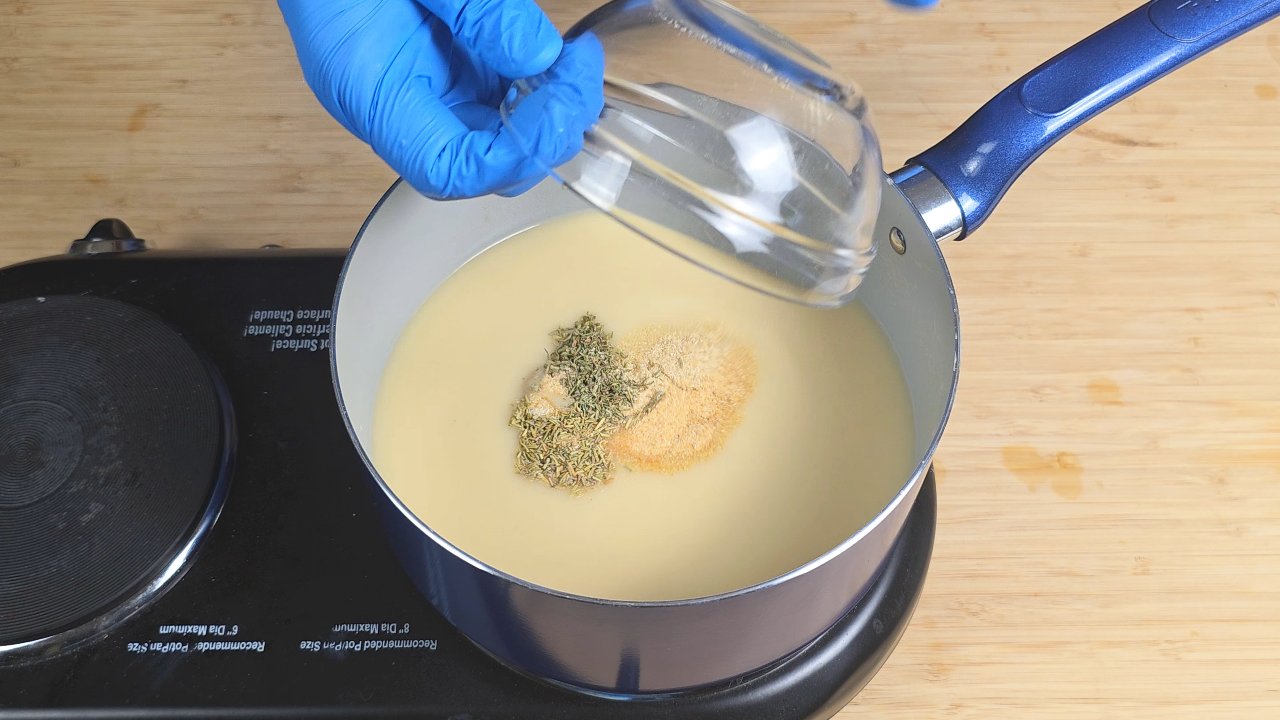
- Once all the chicken broth has been added and well-combined with the roux, add seasonings then stir until well-combined.
- Continue warming gravy on medium to medium-low heat until it reaches desired thickness while stirring frequently.
- Remove gravy from heat and serve immediately.
Video
Notes