


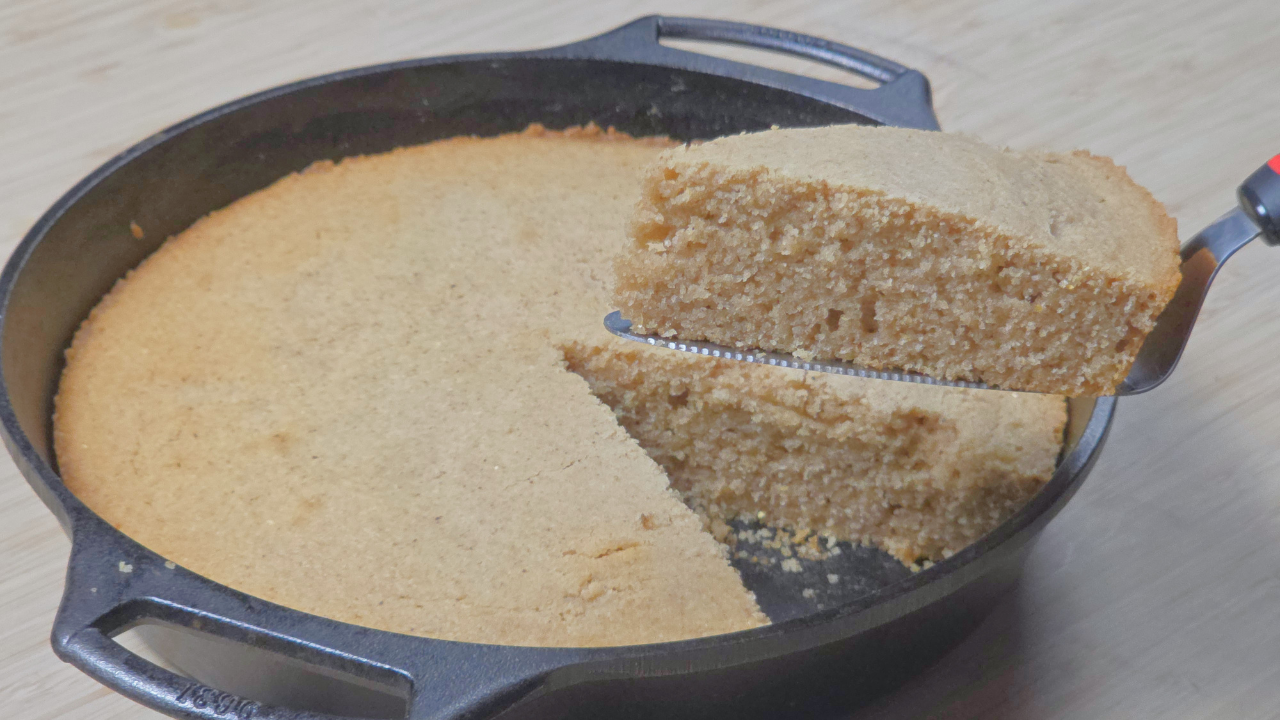
lf you’re clicking on this page, chances are it’s that time of year to enjoy all sorts of holiday treats. I also think it goes without saying, perhaps the most popular treat (or drink, either description works) for everyone is Eggnog. Eggnog can be enjoyed either store-bought or homemade, spiked or spiked, with raw eggs or without, etc. All of that being said, sometimes it never hurts to put a new spin on our favorite dishes. In this post, I sought out to develop a recipe for Cornbread infused with Eggnogg (colloquially named Eggnog Cornbread). After countless hours of testing and tweaking, I believe found the perfect recipe for this and I’m happy to share it with you all!
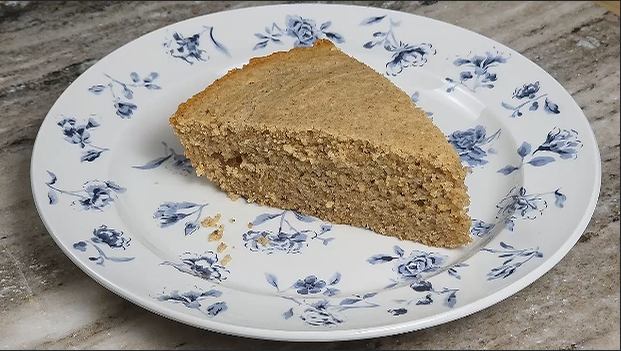
Key Ingredients for Eggnog Cornbread
The cornbread is made from your standard ingredients: Cornmeal, Baking Powder, Flour and Eggnog. That said, there are a number of other ingredients that I incorporated into the recipe that really takes it to a whole ‘nother level.
- Rum Extract: Now to be perfectly clear, this is an optional ingredient and it’s certainly not recommended for use if you’re going to be serving this Eggnog Cornbread recipe to children. That being said, traditionally, eggnog is a drink that is served spike and there’s no reason why this eggnog-infused cornbread should be an exception to the rule. The nice part about rum extract is that it gives the cornbread a boozy flair without incorporating too much moisture. It’s really a perfect addition for all sorts baked goods (not just cornbread) if you’re seeking that warm, sweet and complex rum taste. You have to be careful though, because this is one of those ingredients where less is considered more.
- Cinnamon + Nutmeg + Cloves: As a self-proclaimed cinnamon fiend, I’m of the opinion that cinnamon makes almost anything taste better. By testing this recipe with the addition of cinnamon, it gives the Eggnog Cornbread a subtle warm/spicy note that offers a nice contrast to the somewhat nutty flavor from the nutmeg. Meanwhile, the nutmeg in this recipe offers a nice contrast to the somewhat peppery flavor from the Cinnamon. Finally, the cloves really out to balance out the sweetness of the sugar and the richness of the eggs + cream in the eggnog. You have to be very careful with all of these spices though, because too much of it can end up making the dessert overly spicy and nutty.
- 1 Egg vs. 2 Eggs: I tested out this Eggnog Cornbread recipe with 1 Extra Large Egg as well as 2 Extra Large Eggs. Ultimately, I found that adding 2 eggs gave the cornbread more of a spongy texture and the eggs were quite overpowering in the final product. Meanwhile, unlike traditional cornbread recipes which will call for 2 or even 3 eggs, I still had to take into account the fact that the eggnog itself contains a fair amount of Egg Yolks (which alleviates the need for adding much more). Ultimately, I settled on just using 1 Extra Large Egg, as I found this struck the right balance of achieving cornbread that’s firm & moist without it being too cakey.
- Baking Soda vs. Baking Powder: Although this Eggnog Cornbread recipe relies primarily on baking powder for lift, I did toy around with adding a bit of baking soda to compliment to baking powder. The reason I experimented with this is because baking soda can really aid with browning of the cornbread as it bakes. But then a couple things occurred to me. One, for this type of cornbread, a paler color is actually preferred so that it mimics the look of eggnog. But also, my recipe doesn’t include an acidic component to neutralize that metallic taste you can get with baking soda. So ultimately, I decided that it would best to omit the baking soda altogether for the ideal results.
And there’s one more thing I can’t stress enough. Eggnog Cornbread is highly sensitive to the proportion of fat vs protein (I.E. flour and egg whites) that is used. Even being off by a mere tablespoon can completely change the shape, texture and flavor. That said, I strongly advise that you use a spoon to gather your flour and even level off the top of the measuring cup with a knife. If you scoop out the flour with the cup itself, you risk packing way more flour into the cup (and eventually the dough) than what is required, thus your cornbread won’t bake properly. Weighing your flour with a bowl and kitchen scale is also a perfectly fine option.
Tips for Making this Recipe
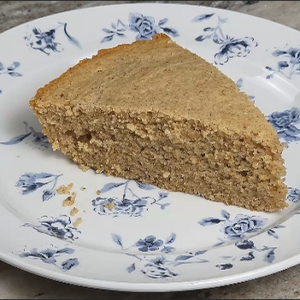
Allow the cornbread to cool for a minimum of 15 minutes after removing from oven. The inside of the Eggnog Cornbread will continue to set and coagulate even after you remove them from the heat. If you attempt to cut into the cornbread too soon while it’s still hot, you risk having it fall apart.
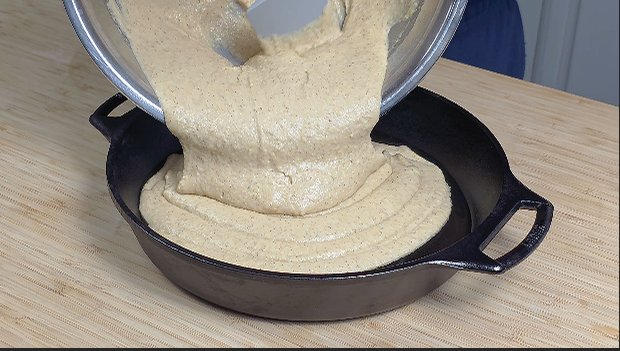
For the best results, use a cast iron skillet. Besides the fact that cast iron skillet do an excellent job at heat retention, which ensures even cooking throughout the batter, the cast iron skillet will also give the Eggnog Cornbread a nice crispy crust. This same crispy crust also helps to seal off the interior of the cornbread as it bakes, ensuring that it stays soft an moist.
Allow the batter to rest before placing in the oven. Once all of the ingredients have been combined, I recommend allowing the batter to rest for at least 5-10 minutes. This will accomplish a couple things. One, this will give the flour & cornmeal time to absorb the moisture, which will contribute to a more tender and less gritty texture. Also, the baking powder will have more time to react with the added liquid, which will give the Eggnog Cornbreadornbread even greater lift while it’s baking. Be careful not to let it rest for too long though, because then you’ll end up with batter that is too thick and it won’t bake properly.
Do not overbake the cornbread. Unfortunately, cornbread is one of those baked goods that’s not very forgiving if you cook it for even slightly longer than directed in this recipe. If 30 minutes have passed since the Eggnog Cornbread was placed in the oven and you’re still uncertain about whether they’re done, you can always insert a toothpick inside of it to see if any wet batter comes out. If the toothpick comes out clean, it’s done.
Frequently Asked Questions
Can I add Creamed Corn or Corn Kernels to this recipe?
I’m personally not a fan of having these extra ingredients in my cornbread (personal preference), which is why I officially excluded them from my Eggnog Cornbread recipe. That being said, if you prefer having these items in your cornbread, you can certainly add them while combining the wet + dry ingredients.
Can I substitute the White Cornmeal with Yellow Cornmeal?
Absolutely! The main difference you’ll notice in the recipe, besides the color, is that the yellow cornmeal will have a sweeter and more potent taste.
Can you substitute Oil for the Butter?
The answer to this question always gets tricky.
I do understand that not everyone is able to eat dairy products and that butter is simply not an option for such individuals. In such cases, you *COULD* replace the butter with a cooking oil, but with a couple of important caveats. For starters, while cooking oils and butter are both different types of fats that can be used in baked goods, their fat composition is not entirely equal. Cooking oils tend to have virtually no water in them (thus is 100% fat), whereas Butter typically has a water content of 20-25% (depending on the brand). So in the event you attempt to substitute the butter for cooking oils, I’d advise only using 75-80% of the amount of cooking oil.
The other caveat is that the use of cooking oils will change the flavor profile of the cookies. Seed oils (I.E. Vegetable Oil, Canola Oil, etc.), are known to be neutral-tasting, meaning they have no flavor. So you will be losing the subtle nuttiness / sweetness in your Eggnog Cornbread ornbread that Butter offers. But then you also have your non-seed oils such as Coconut, Avocado or Olive Oil. These oils are *NOT* neutral-tasting, which means if you use them, you may end up with cornbread that taste like Olives, Avocados or Coconuts, as the oils will overpower the other ingredients.
All of that said, the short and sweet answer I can give you is I *DON’T* recommend it. For a more detailed answer, see above.
Can you freeze the Eggnog Cornbread? And if so, for how long?
You can definitely freeze this Eggnog Cornbread! Once the cornbread has cooled completely, you would simply wrap it tightly in both plastic wrap as well as alumninum foil and it should be good for at least 3 months. While they may still be safe to eat out of the freeze beyond 3 months, the cornbread will gradually lose their flavor and texture after 3 months have passed. For the best resuls, I would advise allowing it to thaw in the refrigerator overnight before you’re ready to consume and then warm in the oven for 10-15 minutes at 350*F.
How long can you store Eggnog Cornbread without freezing?
As long as the Eggnog Cornbread isstored in an airtight container or bag, it should be safe to eat for up to 3 days at room temperature and up to 5 days in the refrigerator. Beyond 3-5 days, I would advise that you dispose of the cornbread as it may no longer be edible.
Try These Other Sides
Easy Eggnog Cornbread Recipe
Equipment
- 1 Whisk
- 1 Plastic Spatula
- 2 Large Mixing Bowls
- Oil / Butter / Cooking Spray (to grease pan / skillet)
- 1 10" - 12" Cast Iron Skillet
- Measuring Cups/Spoons
Ingredients
- 1 Cup All-Purpose Flour
- 1 Cup White Cornmeal
- 3/4 Cup Whole Milk
- 3/4 Cup Eggnog
- 1/2 Cup Melted Unsalted Butter
- 1/3 Cup White Granulated Sugar
- 1 TBSP Baking Powder
- 1 Extra Large Eggs
- 1 TSP Ground Cinnamon
- 1/2 TSP Nutmeg
- 1/2 TSP Cloves
- 1/2 TSP Iodized Salt
- 1 TSP Rum Extract (optional)
Instructions
- Generously grease cast iron skillet and place in oven
- Preheat oven to 350*F and warm skillet while it preheats.
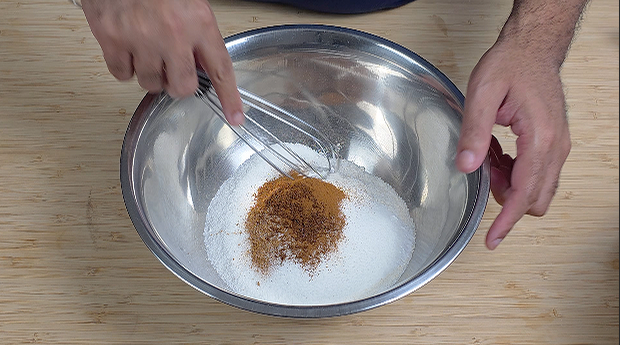
- In large mixing bowl, combine dry ingredients (Flour, Cornmeal, Spices, Salt, Baking Powder and Sugar) and whisk until combined.
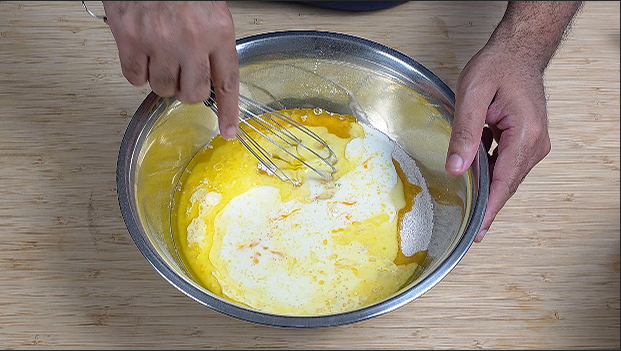
- Add wet ingredients (Whole Milk, Eggnog, Butter, Egg and optional Rum Extract) to bowl with dry ingredients and mix until just combined. Be careful not to overmix batter.
- Once oven has finished preheating, remove cast iron skillet and immediately add batter to hot skillet.
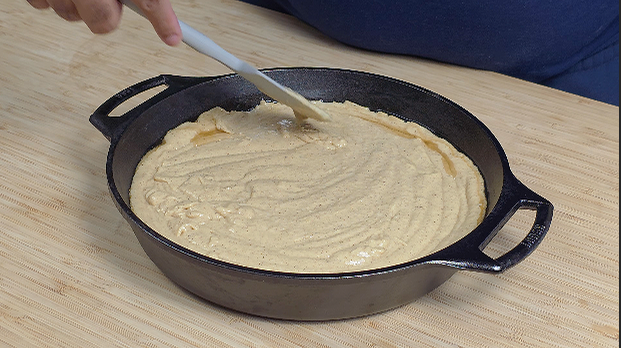
- Spread batter around in cast iron skillet until it forms one even layer
- Place cast iron skillet with Cornbread batter in oven for 25-30 minutes***
- Remove Cornbread from oven and allow to cool for 15-30 minutes before cutting and serving.