



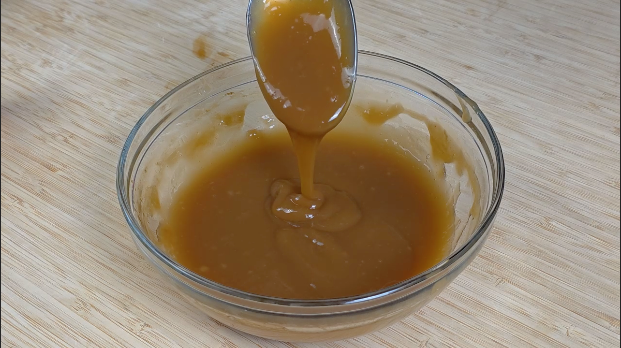
Let’s discuss microwave gravy. There are so many recipes all over the internet (mine own included) for making gravy from scratch on the stovetop. And I would agree it is probably the best way to make gravy. However, there are times when we don’t have access to a stove (whether you’re a student living in a dorm or someone who’s busy traveling while staying in hotels) and yet you still have a taste for some good old-fashioned gravy without having to use the store-bought packets. Believe it or not, not only can you make perfectly fine gravy using the microwave, but you can do so with only 2 ingredients! In this post, I will show you how I do it.
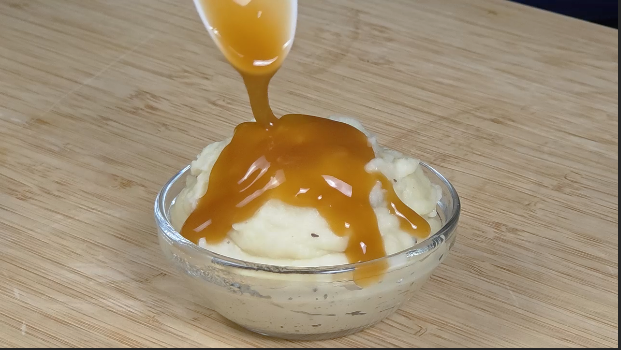
Troubleshooting Microwave Brown Gravy
My gravy is too thick
If your microwave gravy ends up too thick, to the point that it’s more like paste, the most likely root causes are either that you overcooked it in the microwave or that you accidentally added too much cornstarch. Fortunately, all is not lost if this were to happen, as it is still possible to save the gravy by thinning it out. In order to thin out the gravy, simply add a bith more broth or a bit more water to it and give it a good stir. With respect to using too much cornstarch, in the future, I recommend that you spoon & level the cornstarch to ensure you’re getting accurate measurements. Alternatively, you can always weigh your cornstarch as well.
My gravy is lumpy
This is perhaps the trickiest part with gravy, whether you make it on the stovetop or (in this case) the microwave. With flour-based gravy, you’re often combining it with butter or oil to make a roux, which helps to prevent clumping. You don’t have the same extent of protection with cornstarch. Making a slurry for the cornstarch with an equal amount of liquid does help, but the thing with cornstarch is that you still must constantly stir it to ensure it doesn’t clump together and form gummy lumps. If you end up with microwave gravy that is lumpy from the cornstarch having clumped together, that means you didn’t stir it frequently enough, nor did you stir it briskly enough.
My gravy is too thin
If your microwave gravy ends up so thin that it’s more like water, the most likely root causes are either that you undcooked it in the microwave or that you added too little cornstarch. Fortunately, all is not lost if this were to happen, as it is still possible to save the gravy by thickening it. In order to thicken the gravy, simply add a bit more cornstarch and then heat it for additional time in the microwave (additional 1-2 minute intervals), while stirring briskly in between intervals, until desired thickness is achieved. With respect to using too little cornstarch, I recomment you spoon & level the cornstarch to ensure you’re getting accurate measurements. Alternatively, you can also weigh your cornstarch.
Tips for Making this Recipe
Gravy will continue to thicken as it cools. There are varying schools of thought when it comes to the right consistency for gravy. Famously, Chef Gordon Ramsay insists that gravy should be thin. However, there are other professionals who disagree with him. In my humble opinon, I think there’s a middle ground when it comes to gravy. It shouldn’t be as thick as paste, but it shouldn’t be thin to the point that it’s runny either. At the very least, the gravy should stick somewhat to the back of a spoon for optimal thickness. All of tht being said, just be mindful that you’re not cooking the microwave gravy for too long, as it will continue to thicken while cooling.
Ensure that you are using fresh cornstarch. You should always be mindful of the expiration date on your cornstarch before you put it to use. Perhaps the biggest issue people encounter when they’re making gravy is that they’re using extremely old cornstarch. While most brands of cornstarch tend to maintain their freshness for months or even years, because many people don’t use it often, it can end up sitting in the cabinet and before you know it, the expiration date is in the past. When this happens, not only may the microwave gravy fail to thicken, but it can make you sick as it could potentially be moldy. That’s why you should always ensure your cornstarch has not expired.
Use a sieve to strain the gravy. While this is very much an optional step, and it’s one that I often skip, I strongly recommend (especially if you’re a beginner and have never made microwave gravy before now) straining your gravy through a sieve into a bowl or pot before chilling and serving it. This will be an additional safeguard to ensure you don’t have any lumps in your final product. Personally, I do find this step to be a bit frustrating. The reason why is not because it’s hard or takes up too much additional time. Rather, it means that I’ll have another dish to wash, and clean up is the least fun part of cooking (*sigh*).
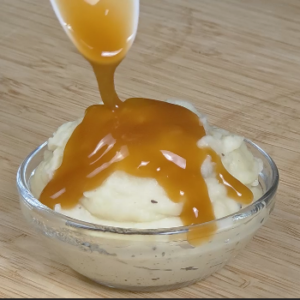
Monter Au Beurre. As you probably guessed, “Monter Au Berre” is a french term. When translated into English, it means “Mount With Butter.” This is a technique that is taught in culinary school and used by french chefs to elevate their sauces and gravy. With this, all you’re doing is adding a bit of cold butter (say, about a tablespoon or so) to the hot gravy or sauce once it is done. This does a couple things. Not only does it enhance the richness of the Beef Gravy, but it also gives the microwave gravy a velvety, shiny finish (which is nice for folks who are big on aesthethics). That being said, this is a optional technique and not required.

Frequently Asked Questions
Can I substitute the Beef Broth with Beef Drippings?
Absolutely! You would just use about 4 tablespoons of beef drippings along with 2 cups of water (or 2 cups of pan juices) in place of the broth in order to make the microwave gravy.
Can I substitue the Beef Broth for Beef Stock?
While you certainly can use beef stock in place of beef broth, you should be mindful of a couple things. One, beef stock tends to be less flavorful than beef broth (at least the stuff sold commercially at stores) as it has less salt, which can cause you to end up with microwave gravy that’s too bland. Also, beef stock tends to contain collagen, which can give the gravy a more jiggly texture as it breaks down into gelatin during cooking.
Can I use unsalted or reduced sodium broth?
I don’t recommend it, as you’ll end up with microwave gravy that tastes awfully bland. Beef broth tends to be fairly heavily seasoned and salted.
Can I substitute the Cornstarch for Wondra?
This is a very good question. For those who are unfamiliar with Wondra, it is a kind of flour sold in supermarkets that is pre-cooked, or heat-treated. The biggest drawback with using flour for gravy is that it’s raw, and it requires that you heat it up with a roux before combining it with the broth or drippings. That being said, Wondra effectively eliminates the need for a roux when making gravy, saving both a number of steps as well as time.
That being said, if you do choose to substitute the cornstarch for Wondra when making this microwave gravy, there’s a couple of things you should be mindful of. As Wondra has also been pre-gelantized, you only need to use about half the amount of Wondra as you would cornstarch. In addition, Wondra will also give the gravy a more opaque finish versus the glossy finish it has with cornstarch.
Can you freeze this Microwave Gravy? And if so, for how long?
Absolutely! If anything, this 2-ingredient recipe freezes better than a gravy recipe that is made with butter or milk, as dairy items have a tendency to separate from the gravy. That being said, if the ingredients do still manage to separate somewhat, just stir them together (as well as add splashes of broth if too thick) until they’re well-combined again. This microwave gravy should maintain its freshness in the freezer for up to 6 months. Then once you’re ready to eat it, slowly thaw it out in the refrigerator overnight before attempting to heat it. Just be sure to place it in an airtight container and leave a bit of space to account for expansion as the liquid freezes.
Can I make Microwave Gravy in advance?
Absolutely! You would just chill it in the refrigerator inside an airtight container, and it should be good for up to 3 days. Once ready to consume, you can reheat it in a saucepan or warm it up in the microwave for 30-second intervals. After 3 days, I would advise that you dispose of it as the microwave gravy may no longer be safe to consume.
Try These Other Recipes
Easy 2-Ingredient Microwave Gravy Recipe
Equipment
- 1 Whisk
- Measuring Cups/Spoons
- 1 Serving Bowl or Large Measuring Cup
- 1 Prep Bowl
- 1 Gravy Boat (optional)
- 1 Sieve (optional)
Ingredients
- 2 Cups Salted Beef Broth (Cold or Room Temperature)
- 3 TBSP Cornstarch
Instructions
- Add beef broth to large (microwave-safe) bowl or large measuring cup, and reserve 3 TBSP of broth for cornstarch slurry
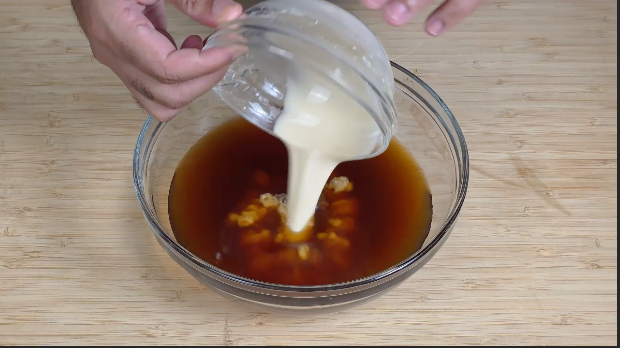
- In separate prep bowl, add cornstarch along with reserve 3 TBSP of broth and whisk until fully dissolved for cornstarch slurry.
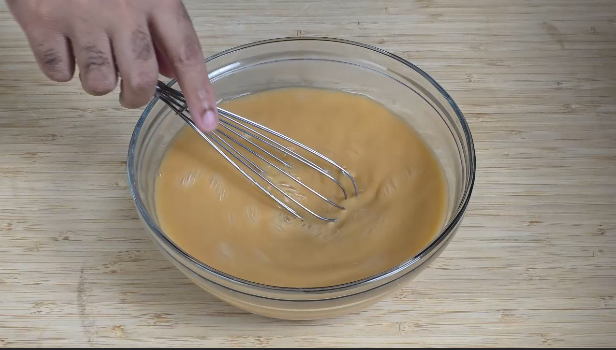
- Add cornstarch slurry to bowl or cup with broth and whisk briskly until well incorporated and there's no clumping.
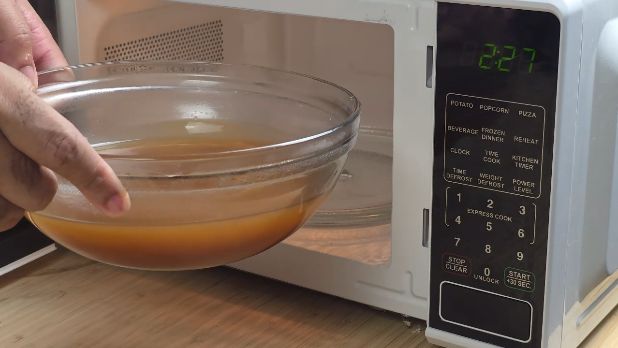
- Place bowl or cup with broth in microwave and warm on high heat for 5 to 9 minutes***, or until the gravy reaches desired thickness. As it cooks, be sure to pause microwave 2-3 times and whisk briskly each time to ensure no clumping.
- Carefully remove gravy from microwave and allow to cool 5-10 minutes before serving.