


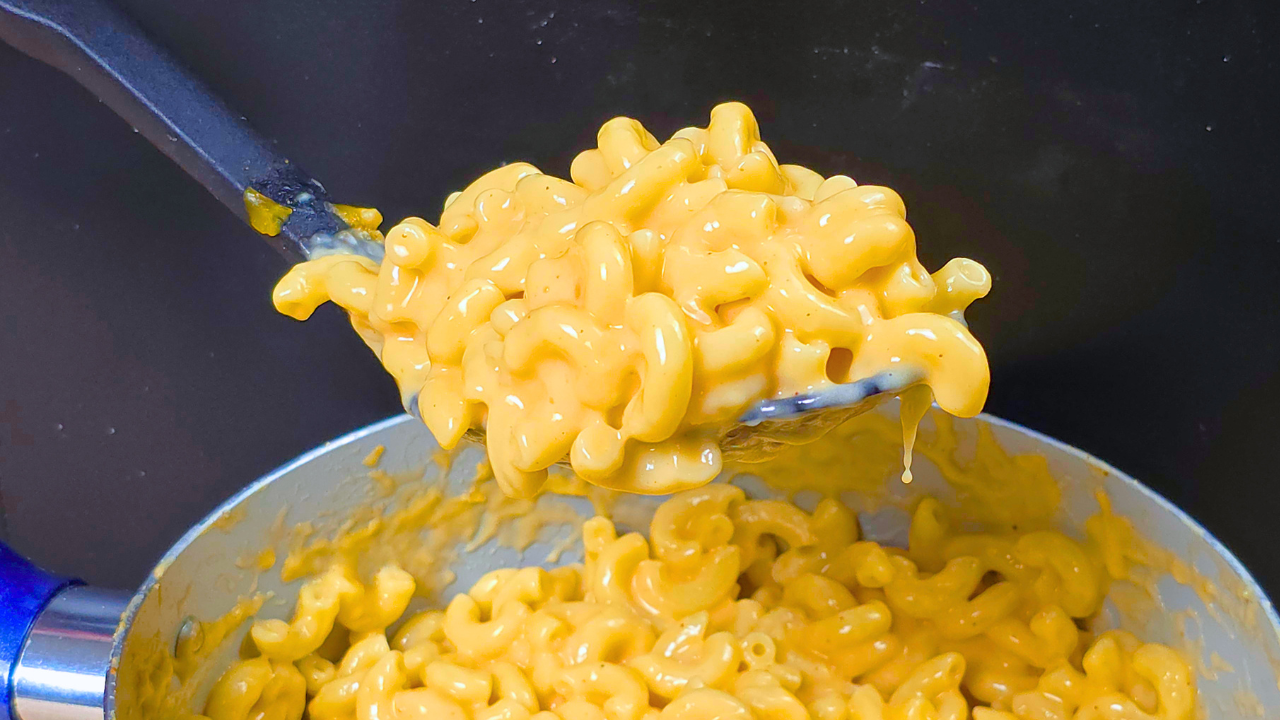
Growing up, many of us remember eating Kraft Mac and Cheese. But over time, after various changes to its ingredients and formula, it just doesn’t hit the same way it used to. Come to find out, it is remarkably easy to make perfectly tasty mac and cheese from scratch at home. And I’m not just talking about all the fancy baked mac and cheese recipes out there, but specifically stovetop mac and cheese. In fact, after quite a bit of testing on my part, I discovered that you don’t even need a ton of ingredients to make delicious stovetop mac and cheese. In this post, I will share the 4 simple ingredients that I use for my stovetop mac & cheese.
Troubleshooting Stovetop Mac & Cheese
My cheese turned out grainy and separated.
There are a couple of reason why this might happen. One, you simply aren’t working with enough starchy liquid in order to fully melt & emulisfy the cheese. This can happen if you cook the noodles for too long and allow too much water to boil out. Two, you didn’t cook the noodle long enough and they’re too firm. What ends up happening is the noddles simply suck up all of the moisture from the cheese and then you wind up with stovetop mac & cheese that’s all oily and separated. It’s critical to cook the noodles just long enough to release a sufficient amount of starch for effective thickening of the cheese sauce and emulsion of the cheese onto the noodles.
My cheese sauce is too soupy
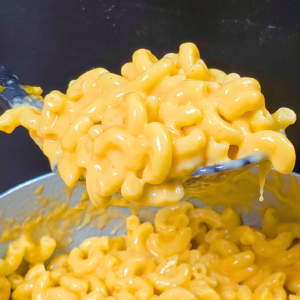
TMe personally, I’m not a fan of mac and cheese that is too wet or too runny (many people seem to mistake wet/runny mac & cheese for creamy mac & cheese) Usually, the cheese sauce will thicken as the stovetop mac & cheese cools. However, in the event your sauce still ends a bit too soupy even after allowing it to cool and rest for a few minutes, the likely culprit is that there was too much liquid left in the pot. In order to fix this, what you can do is either add some additional cheese or simmer the mac and cheese a bit longer to evaporate the excess liquid. You should then end up with a texture that’s more velvety.
My cheese sauce is too thick
The opposite extreme can occur as well. If oyu were to end up with cheese sauce for your stovetop mac & cheese that’s too thick, the likely culprit is that you let it rest for too long. Mac & Cheese is one of those dishes that are best served hot and fresh. If not, the fats in the cheese will have a tendency to solidify and while it will still be quite tasty, the mac & cheese will tend to lose its creamy texture. The easy way to fix this is by simply adding a bit more liquid, such as more starchy water or even half-and-half and cream, to the mac & cheese until you achieve the texture and consistency that you desire.
Tips for Making this Recipe
For the best results, use whipped cream cheese. Officially, I didn’t specify what type of cream cheese to use for my Stovetop Mac & Cheese. The reason why is because I understand the block-style cream cheese tends to be more accessible and is often what people have readily available in their refrigerator. That being said, while not required, my personal preference is to use whipped cream cheese. The reason why is with its airy texture, you’re going to have a much easier time incorporating it into the mac and cheese with the other ingredients than you would with a much firmer block of cream cheese. You will typically find it in the grocery store right beside the block-style cream cheese.
Use a nonstick pot. I know there’s a lot of passionate opinions about the use of Teflon cookware (which is one of the many common materials used for nonstick pots), but the point of this tip isn’t to start a debate over that topic. The reason I suggest using a nonstick pot is to ensure you don’t end up scorching the noodles or the cheese, thus negatively affecting their texture and making it harder to clean up the pot. That being said, besides Teflon cookware, you can also easily find ceramic nonstick cookware that does not contain any Teflon (although, you should be mindful that ceramic nonstick cookware is less durable than Teflon) to use for Stovetop Mac and Cheese.
Ensure ingredients are room temperature. This tip is imperative for a number of reasons. When the cream cheese and the shredded cheese are too cold, they will end up cooling the sauce too much and thus will not melt and emulsify as seamlessly. In addition, another reason is because cheese that has been brought to room temperature will tend to have more relaxed fat molecules, which allows for the release of more robust flavor in the Stovetop Mac & Cheese. For the best results, you should allow both the cream cheese and the shredded cheese to sit out at room temperature for 1 to 2 hours before combining with the other ingredients to make the Mac and Cheese in the pot.
Add a dash of mustard powder or turmeric. This is very much an optional step, and I typically do not do it myself. But for those who may not know, both mustard powder and turmeric are spices have a very mild (some would even describe it as neutral) flavor profile when added to dishes in small quantities. What they really do though is really enhance the color and brightness of the stovemap mac & cheese (without using artificial dyes). This is a neat little trick for those who are trying to impress others with their cooking and are big on aesthetics. But again, as mentioned, a little does go a long way. I recommend only using about 1/8 of a teaspoon.
Frequently Asked Questions
Can I substitute the full fat cream cheese with low fat cream cheese?
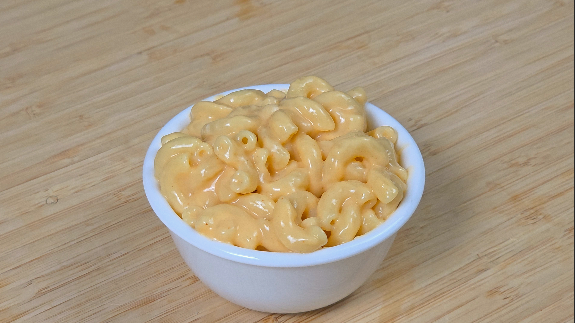
I don’t recommend it. The fat is a critical component for thickening the cheese sauce for this stovetop mac & cheese in combination with the starchy water. If you try using cream cheese with reduced fat levels, there’s the risk that the sauce will be on the thinner and runnier side, and thus won’t quite have the same creamy texture that you see in the pictures and on the video.
Can I use freshly grated cheese for this recipe?
While using freshy grated cheese works just as well, do note that it will extend both prep and clean up time. The spirit behind this stovetop mac & cheese recipe is that it’s supposed to be quick & easy. While the anti-caking agents used on pre-shredded cheese is a legitimate concern, the high-moisture and fat content of the cream cheese hydrates the anti-caking agents and the starchy water helps to thicken the chese into a creamy sauce before it has the chance to clump up.
Can I substitute the cream cheese for greek yogurt or sour cream?
I love this question, because it just so happens I also tested this stovetop mac & cheese recipe with the addition of both greek yogurt and sour cream. While they both worked well as 1:1 substitutions from a texture standpoint, I found that the greek yogurt was a bit too tangy for my liking. Meanwhile, I found that the sour cream wasn’t quite rich enough for my liking. In addition, the cheese sauce with both did end up on the thinner since they both have a lower fat content. That being said, they are both healthy alternatives for those who may have dietary restrictions.
Can I substitute the elbow noodles with other kinds of pasta?
You certainly can! Me personally, I consider myself a traditionalist, so I’m fairly set in my ways when it comes to only using elbow macaroni noodles for baked and stovetop mac & cheese. That being said, I know the trendy thing right now is for folks to use cavatappi noodles, and there is nothing wrong with that as a preference. Thsi recipe works perfectly well with that as well as most other types of noodles, although I can’t say the same for gluten-free noodle specifically as this recipe has not been tested with them.
How long can you store this Stovetop Mac & Cheese in the refrigerator?
As long as the Stovetop Mac & Cheese is stored in an airtight container or bowl, it should be safe to eat for at least 3 days. After 3 days, it may begin to lose its flavor & texture. Once 5 days have passed, I would advise that you dispose of the stovetop mac & cheese as it may no longer be edible.
What’s the best way to reheat Stovetop Mac & Cheese?
There are 2 ways you should reheat stovetop mac & cheese. One way is what I would describe as “low and slow” on th stovetop, and the other is warming it in 10 to 15-second bursts in the microwave. This is because warming it on too high of a heat for too long can not only scorch the mac & cheese as well as dry it out, but you risk curdling the cheese as well. In the event the stovetop mac & cheese solidifies while in the refrigerator, just add splashes of starchy water, half-and-half or cream and stir until it achieves your desired consistency. I advise against using milk because, due to its lower fat content, the cheese won’t re-emulsify as well.
Try These Other Sides
-
Best Cornbread (Southern-Style)
-
Easy Honey Cornbread Recipe
-
Best Baked Mac and Cheese
-
Honey Butter Biscuits (Better Than Church’s)
-
Red Lobster Cheddar Bay Biscuits (Copycat)
Easy 4-Ingredient Stovetop Mac & Cheese
Equipment
- 1 3qt Saucepan
- 1 Slotted Spoon
- Measuring Cups/Spoons
Ingredients
- 4 Cups Cold Water (for boiling)
- 2 Cups Small Elbow Macaroni
- 1/2 Cup Cream Cheese
- 1 Pkg bettergoods Farmhouse Style Shredded Cheddar, Gouda, and Gruyere Cheeses (or your favorite 7-8oz shredded cheese blend)
- 1 TSP Morton Season-All (or your favorite Salt & Pepper seasoning blend)
- 1 TSP Iodized Salt (for boiling)
- Reserve Hot Pasta Water (approx 3/4 to 1 cup)
Instructions
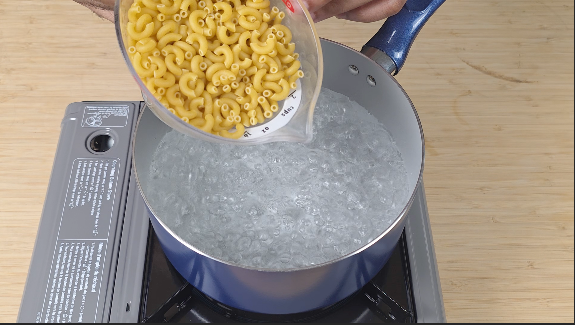
- To the 3qt saucepan, add 4 cups of cold water and warm on high heat until boiling briskly.
- Once boiling briskly, add 1 TSP iodized salt to water and stir around until well dispersed.
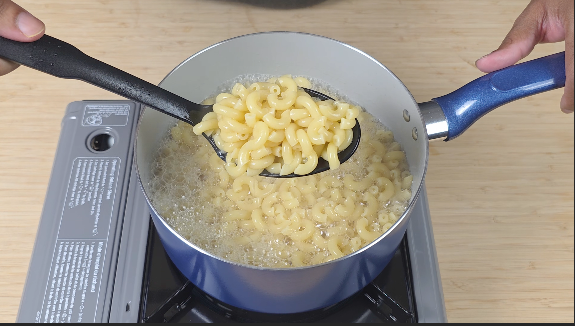
- Reduce heat to medium / medium-high and cook noodles slightly longer than al dente (approx. 10 minutes) while stirring frequently to avoid clumping.***
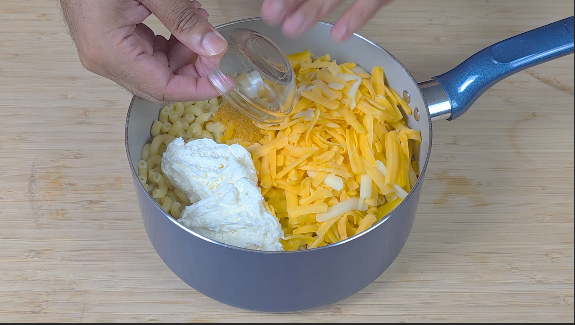
- Remove from heat while reserving remaining hot pasta water and noodles in pot, then add cream cheese, salt + pepper blend and shredded cheese blend to pot
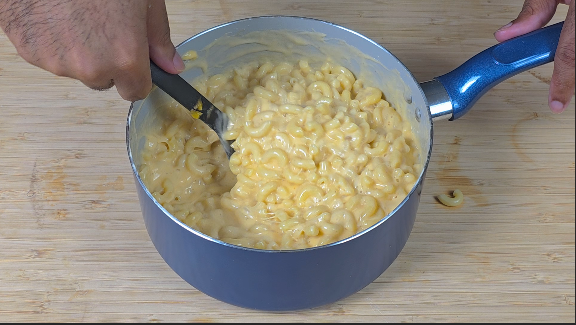
- Stir added ingredients around until the cheeses are fully melted, the seasoning is well-incorporated and you achieve a creamy/velvety texture.
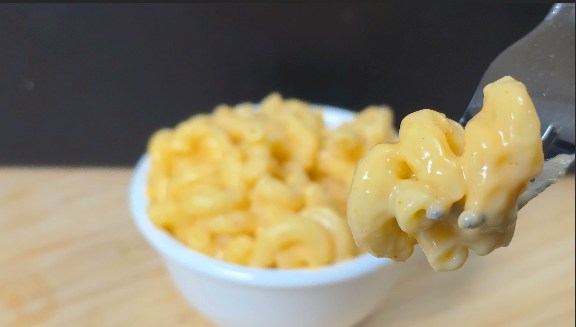
- Allow cheese sauce to thicken for a few minutes before serving.
Video
Notes